
Blended Online First Aid Courses
Lifesaving skills with flexible online modules and expert-led practical training.
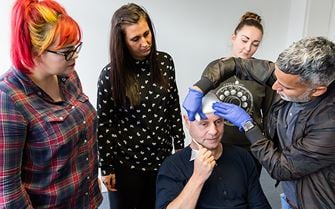

Mental Health First Aid Courses
Essential training to identify early signs of mental health concerns, offer immediate support, and direct individuals to appropriate professional services.
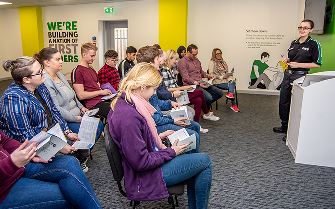
Health and Safety Courses
Basic awareness and specialised training in risk assessment, manual handling, and fire safety.

eLearning Courses
A wide range of interactive, self-directed courses to learn at your own pace - anytime, anywhere.

School Courses
Training to help cover your first aid needs as a workplace and help meet your duty of care for your pupils.

About our courses
First aid refers to the prompt assistance provided to someone who is injured or unwell before emergency medical professionals take over. Its primary goals are to save lives, minimise further injury, and support the recovery process. This can include anything from treating minor cuts to performing critical procedures such as CPR.
St John Ambulance is the nation’s leading first aid training provider. We deliver first aid, health & safety and mental health first aid training to hundreds of thousands of companies, local authorities, and members of the public every year.
We have thousands of training courses across the country, including a full suite of first aid, mental health first aid, risk assessment, fire marshal, and moving and handling training courses to meet your needs.
Working out what you need: Use our online calculators to find out what your requirements are for first aiders, fire marshals and first aid kits.
In-house and on-site training: We offer in-house and on-site first aid and health and safety training at your premises, workplace, school or community group.
Our training venues: We have over 200 training venues across the country, use this page to find the nearest training venue near you, and view the facilities and travel advice for each venue.
First Aid at Work vs. Emergency First Aid at Work Guide: A guide that explains the key differences between FAW and EFAW courses, including when each is most suitable and the benefits of FAW for higher-risk or larger workplaces.
Mental health resources: Our mental health resources have been created to provide information on how to create and maintain a supportive workplace where employees can thrive.
Checking and replacing certificates: How to verify a St John Ambulance certificate or get a replacement for a lost or damaged certificate.
First aid and fire safety regulations: Under health and safety law, employers have responsibilities relating to first aid and health and safety in the workplace.
Completing a risk assessment: The first aid and fire marshal cover you need will depend on the type of workplace and level of risk. You are required by law to complete a risk assessment.
Guidance on mental health first aid training for the workplace: The Health and Safety Executive (HSE) have updated their guidance. As of 2018, employers need to consider covering Mental Health First Aid training in addition to First Aid at Work training. Find out what you need to do.
Reporting incidents and record keeping: How to keep records and report workplace incidents to meet the Reporting of Injuries, Diseases and Dangerous Occurrences Regulations 2013.
The Corporate Manslaughter Act: The Act means companies can be found guilty of corporate manslaughter for serious management failures resulting in a breach of duty of care.
Associate membership insurance: We provide ‘Good Samaritan’ insurance cover for people who have successfully completed certain first aid courses.
Absence Planner 2025: Download our free absence planner to help you track when your qualified staff are away, so you can see what extra cover you need to stay HSE compliant – especially during popular holiday periods.

Emergency First Aid At Work - Blended Online
This course option combines online training with half a day of in-person instruction. It provides a set of practical skills needed by first aiders in most workplaces, giving both the ability and know

Community Lifesaver Course
The Community Lifesaver Course teaches you CPR, defibrillator use, and first aid training for all ages.