Health and safety manager helps save own life using first aid skills learned for work

A health and safety manager has revealed how first aid training he completed for work helped save his own life when he suffered a devastating "widow maker" heart attack at home.

Army veteran David Murray, 55, who lives in Doncaster, recognised the symptoms of a major heart attack and immediately put his training into action, instructing his wife to call 999 and fetch aspirin from his first aid kit while he waited for paramedics to arrive.

Now the father-of-one is sharing his story to encourage more people to learn life-saving skills and is backing the release of St John Ambulance’s new-look first aid training programmes.

David, Senior Safe and Well Trainer for construction giant BAM UK & Ireland, first trained with St John Ambulance, England’s leading first aid charity, in 2012. On 14 March this year, he woke in severe pain and immediately knew something was seriously wrong.

He said: "I had an anterior STEMI heart attack, often known as a 'widow maker', which many people do not survive. I was short of breath, clammy, grey in colour and my chest was in agony. The symptoms were unmistakable.

"Because of my first aid training, I recognised what was happening straight away and told my wife to call 999. I also told her to get aspirin from the first aid kit in my car because I knew chewing an aspirin can help during a heart attack. I genuinely believe that knowledge contributed to saving my life.

"By the time the paramedics arrived, the pain had started to ease, and I felt my chances of survival were improving. It was terrifying for my wife and daughter. I feel incredibly fortunate to still be here."
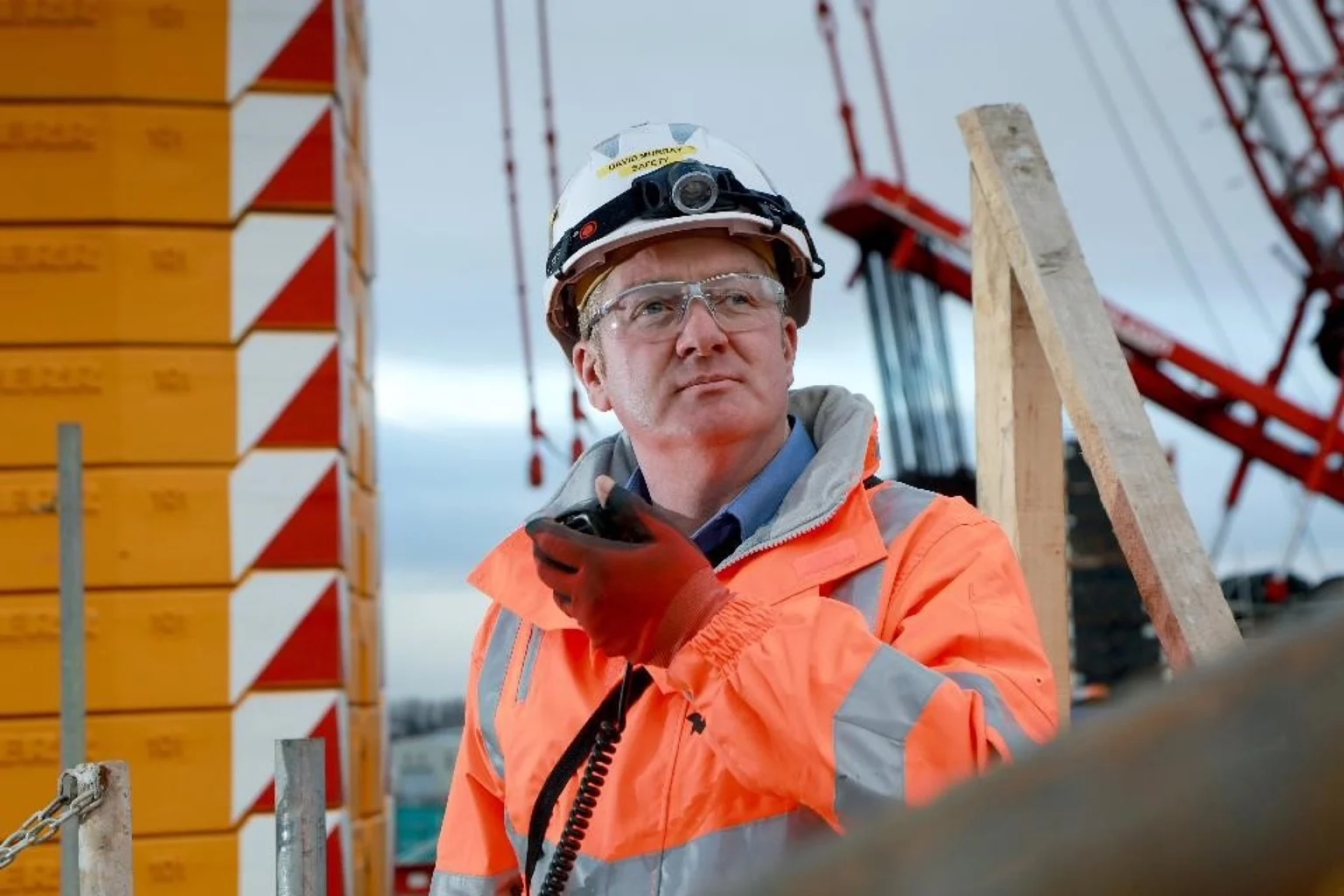
A photograph of David Murray on a construction site wearing his health and safety gear.

David Bucksley, Health, Safety & Wellbeing Director at BAM UK & Ireland, said: “We are incredibly pleased to see David make a strong recovery and share his story. His experience highlights why ongoing investment in health, safety and wellbeing remains so important.

“At BAM UK & Ireland, we are committed to ensuring our people have the confidence, knowledge and practical skills to respond in an emergency situation, whether they are on site, in the office or at home with their families.”

The life-saving intervention comes as St John Ambulance releases of a newly rebuilt, modernised First Aid at Work Suite focused on confidence, competence and real-world readiness.

Fresh research commissioned by England’s leading first aid charity reveals a concerning lack of workplace first aid preparedness across the UK. While 28% of workers have needed first aid treatment on the job and 45% have seen a colleague suffer a medical emergency, many people remain unprepared to respond.

Just 40% of those who witnessed a workplace emergency felt confident enough to administer first aid. Nearly half (45%) assisted in other ways, such as calling for help, while in a worrying 3.8% of incidents, nobody present felt equipped to intervene.

St John Ambulance’s new approach puts practical experience at the heart of learning, using immersive scenarios, hands-on practice and progressive skill-building.

Building confidence through realistic scenarios helps ensure those skills stay with people long after the course ends.

Lisa Sharman, Head of Education and Commercial Training at St John Ambulance, said: "David's story is a powerful reminder that first aid training is about far more than gaining a qualification.

“When an emergency happens, people need to be able to recall critical skills, stay calm under pressure and know exactly what action to take.

"That's why we've transformed our training around realistic scenarios and practical learning that builds confidence as well as competence.

“Ultimately, success isn't measured by passing a course. It's measured by people being ready to step forward and save a life when it matters most."

David, an IOSH-qualified behaviour specialist, Fellow of the Royal Society for Public Health and holder of a Diploma in Occupational Health and Safety, believes the course redesign will help create more capable first aiders.

He said: "First aid needs to become instinctive. The more realistic and hands-on the training, the more likely people are to remember what they've learned and have the confidence to use it.

"A good first aider can quickly assess a situation, take control and make potentially life-saving decisions.

“Building confidence through realistic scenarios helps ensure those skills stay with people long after the course ends.”

Sign up or for more information about St John Ambulance's new-look First Aid at Work courses.

Contact us

If you need to contact us, our media team is available 8:30am-8pm, 7 days a week. Call us on +44 03330 154 412 or email PR@sja.org.uk.

Published on: 19/10/2026