St John Ambulance
Donate

Young Responders programme extended thanks to new grant

The programme which taught thousands of young people street first aid is to be extended thanks to players of The Health Lottery.

St John Ambulance will deliver its Young Responders programme to young people across the East Midlands for the first time thanks to players from The Health Lottery.

The first aid and health response charity has received a grant of nearly a quarter of a million pounds from the Health Lottery Foundation to expand its Young Responders programme, helping more young people develop the confidence and skills to respond in a health emergency.

The two-year grant of £241,807, the biggest ever made by the Health Lottery Foundation, will fully fund the delivery of Young Responders in the region, enabling St John Ambulance to recruit and train specialist staff and work with local partners to reach young people from underserved communities.

St John’s Young Responders programme started delivering street first aid sessions during 2023, with training focused on how to treat injuries resulting from major societal issues such as knife crime. Key topics covered include:

  • responding to a catastrophic bleed

  • dealing with an alcohol or vape spiking incident

  • performing a primary survey and CPR

  • how first aid situations affect mental health and wellbeing, and how to get support
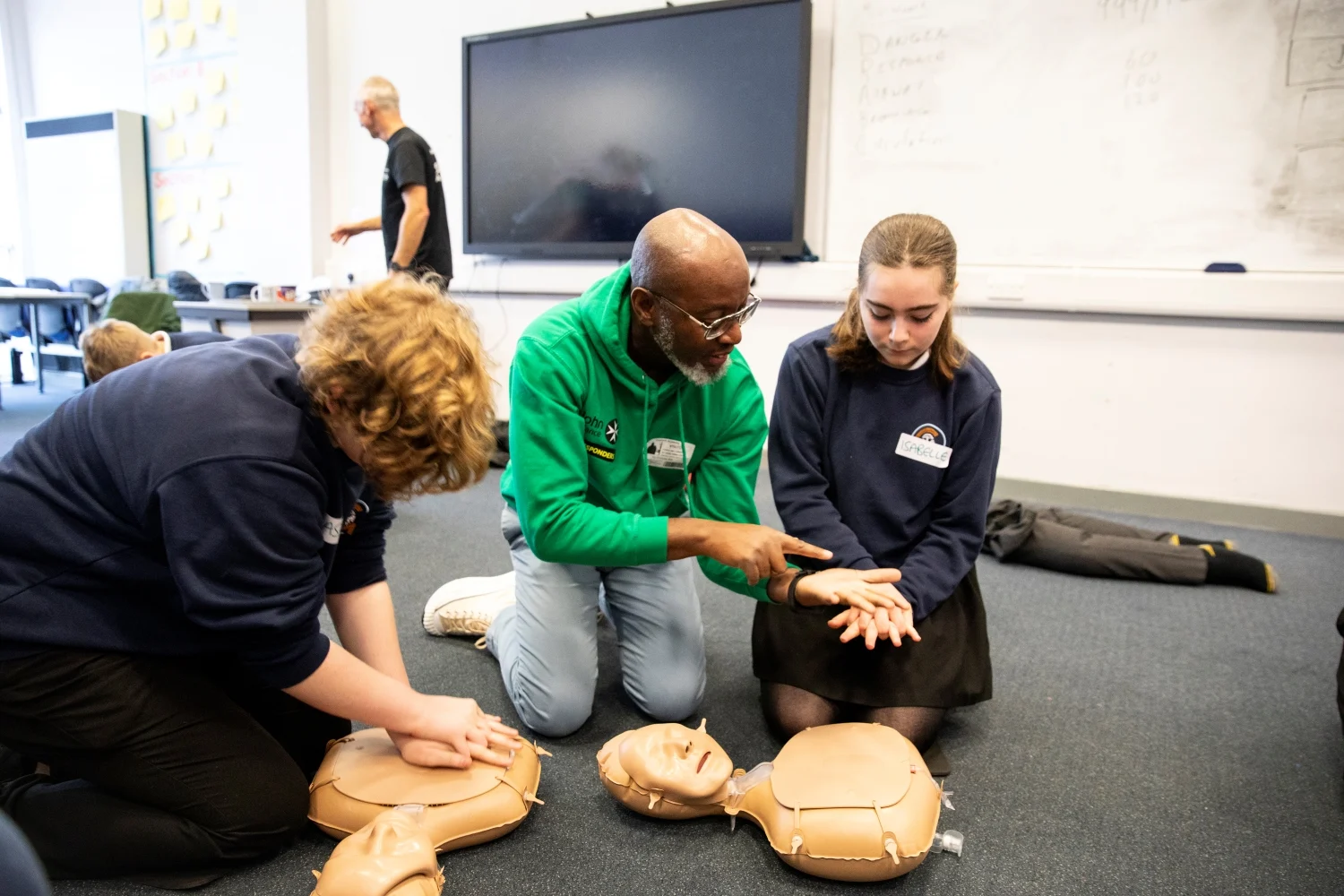
Three people in a classroom kneeling on the floor with CPR mannequins in front of them. One of them is showing a student how to position their hands for CPR. There are other people and CPR mannequins in the background.

The programme has already been rolled out across the North East, West Midlands, London, Hull, East Riding, North Lincolnshire, and North East Lincolnshire — laying the groundwork for nationwide expansion.

Young Responders was created to engage and empower young people from diverse communities who face the greatest health inequities to become active health citizens, through practical physical first aid and mental health awareness sessions relevant to the challenges they face.

The programme is aimed at young people aged 11 to 25 from underserved communities, including those who are care-experienced, young carers, those not in education, employment or training, and young people exposed to or at risk of street violence.

Since 2023, Young Responders has delivered lifesaving skills to more than 72,000 young people in England, helping them build confidence, resilience and the skills to act in an emergency.

With a full team in place, local engagement will start in East Midlans to secure Young Responders bookings with schools, youth organisations and community partners across the region. Delivery will continue until December 2027.

The new East Midlands programme aims to train around 15,000 young people by December 2027, helping to create safer, more resilient communities across the region.

Pauline Bartley, Young Responders Project Manager at St John Ambulance, said:

“The Health Lottery Foundation funding is a huge step forward for Young Responders and the young people we support. The expansion of the programme means we can reach more young people who may not otherwise have access to lifesaving skill and give them the confidence to act in a crisis and make a real difference in their communities.”

Delva Patman, CEO at The Health Lottery Foundation, said:

"We are thrilled to be working with St John Ambulance to roll out such a vital programme into a new area. Thanks to players of The Health Lottery we've been able to award our largest ever grant. We were impressed by the impact the programme has made to date and could see the urgent need to expand it further. We look forward to working closely with St John Ambulance over the next two years and hope to visit the East Midlands, to meet some of the Young Responders and celebrate their achievements."

Learn more about our Young Responders programme for ages 11-25.

Contact us

If you need to contact us, our media team is available 8:30am-8pm, 7 days a week. Call us on +44 020 7324 4148 or email PR@sja.org.uk.

Published on: 03/04/2026