Traffic accidents can range between minor incidents such as a bicycle crash or more serious incidents like a vehicle crash. It is important to make sure that the area is safe before you help any casualties. This is so that you, the casualties, and any other road users are protected.

Once you know the area is safe, quickly assess the casualties and prioritise treatment. Give first aid to anyone with life threatening injuries first before tending to other casualties.

Call 999 or 112 for emergency help and give as much detail about the incident as possible, such as number of casualties, their ages, and types of injury.

What to do

Make sure the incident area is safe for yourself and others

  1. Park safely and well away from the incident. Make sure you turn on your hazard lights and put on a high-vis jacket if you have one.

  2. Ask two car drivers to protect the incident area in each direction by parking well away and turning on their hazard lights. If you have warning triangles, the area can be protected using these as well. Bystanders can help you do this while you help the casualties.

  3. Make vehicles safe by switching off the ignition of all damaged and surrounding cars and, if you can, disconnect the battery.

    • On large diesel vehicles, this is marked on the outside
  4. Make vehicles stable. Apply the handbrake, put the vehicle in gear or, if the vehicle is upright, put a block in front of the wheels. If it is on its side, try to stop it rolling over further, but do not attempt to move it.

  5. Be alert for physical danger, such as traffic. Make sure no one smokes near the incident.

  6. Call the emergency services to report damaged power lines, spilt fuel, or vehicles carrying hazardous substances.

Assessing the casualties

  1. Call 999 or 112 straight away.

  2. Assess the casualties quickly by doing the primary survey and treat anyone with life threatening injuries first.

    • Assume that anyone involved in the accident may have neck or spinal injuries.
  3. If possible, treat the casualties in the position you find them and make sure you support their head and neck at all times.

  4. Make sure you search the surrounding area so that casualties who are not in the immediate incident area are found and treated. Ask other people to help you.

  5. If anyone is trapped inside or under a vehicle, the fire service will need to help them.

  6. Monitor the casualties and record their breathing, pulse, and level of response.

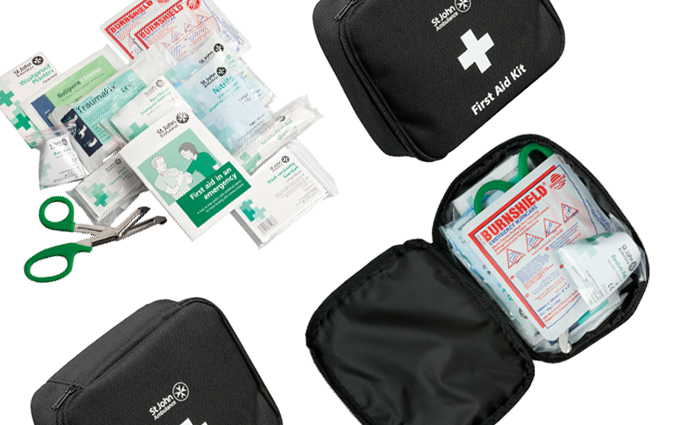
Browse our first aid products:

Motoring and car first aid kits

Motoring and car first aid kits

Shop now

Related first aid advice

Who should I call?

At some point in their life, most people will witness or be involved in an accident or medical emergency. Knowing what to do and when you should call the emergency services can potentially save lives.

Spinal injury

There are a variety of possible causes for a spinal injury. The greatest risk is damage to the spinal cord. Find out what to do and what to look for.

Primary survey

Use the primary survey to quickly assess the situation and check the casualty for injuries or conditions that could be immediately life threatening. Find out what to do.

Make a Difference

Donate now to support our volunteers and to help save lives.